





Trustpilot
★★★★★
28,491 reviews


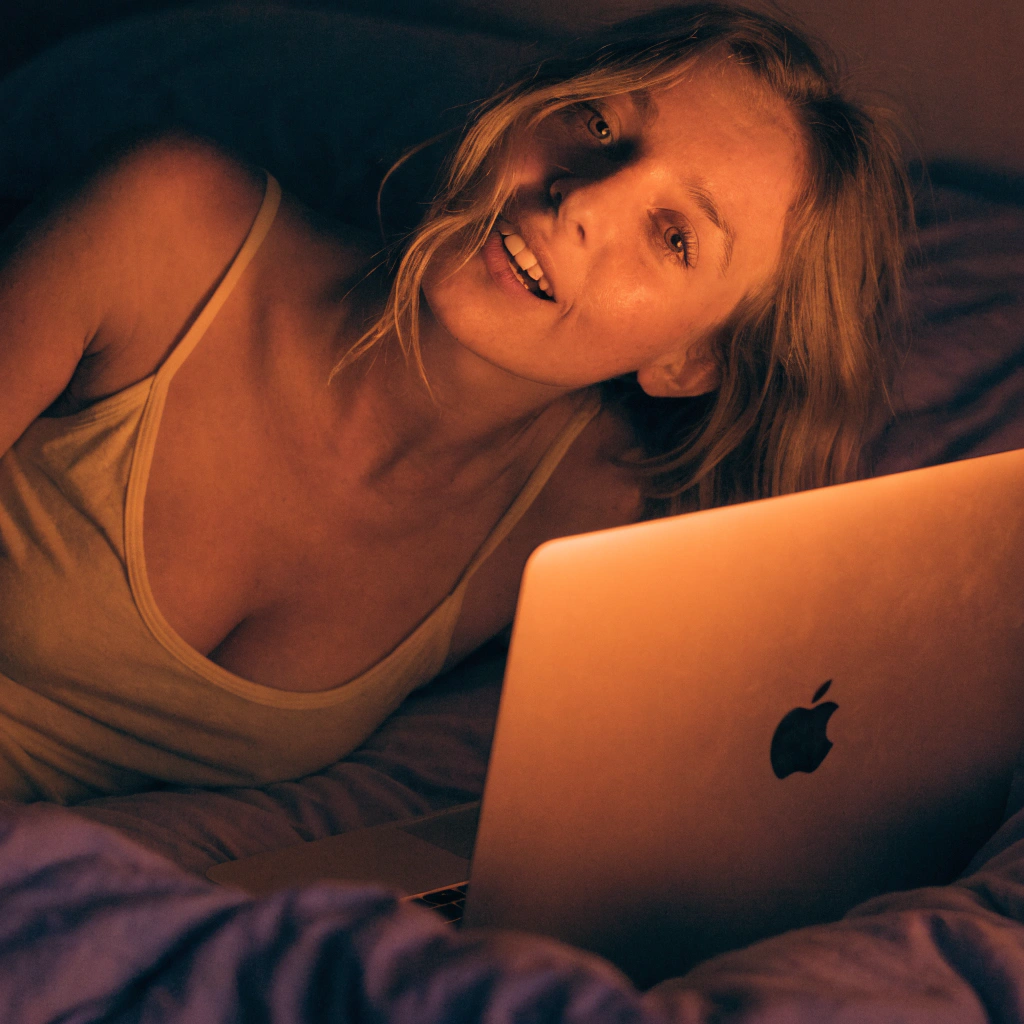










Remember Omegle's glory days? It hasn't aged well. Clunky interfaces, endless bots, and unpredictable moderation are the norm now. Imagine a fresh start: real two-way cam-to-cam conversations where both cameras are on by design. We've stripped away the frustration, focusing on genuine connection. Whether you're here for a deep chat or a spark of chemistry, this is the upgrade you've been waiting for.
Tired of waiting rooms and one-sided streams? This is the alternative you deserve. Our mutual-cam approach ensures both sides are present and engaged, cutting through the noise. It's that simple: two cameras, two people, one meaningful connection. Discover why so many are making the switch.
“Real connection, no compromises.”
When Omegle vanished, it left a specific, hungry silence. It wasn't just a website closing; it was a doorway slamming shut on a particular kind of spontaneous, unrehearsed human electricity. People lost the gamble, the raw chance of turning a corner and finding a stranger's face waiting. The loss wasn't about features or filters. It was about the immediate, unscripted potential for a spark that could happen in the very next click, that shared breath before someone speaks, the flicker of a smile that isn't curated for a feed. That's the void everyone is trying to fill now. They aren't looking for another social media platform or a dating app with endless swiping. They're searching for the direct, visceral hit of a live, mutual connection where the only thing between you and another person is a camera lens and a few thousand miles of cable. A place where the first 'hello' is a look in the eyes, not a typed message lost in a sea of text. That instant, reciprocal recognition is the drug Omegle provided, and its absence has created a frantic, global demand for a successor that understands the assignment: two cameras, two people, one unpredictable moment of chemistry.
What replaced it, initially, was a flood of inferior copies and hollow experiences. Endless 'next' buttons leading to dead pixels, bots parroting scripts, or worse, one-way streams where you're just a spectator in someone else's broadcast. That's not a replacement; that's a betrayal of the original promise. The real loss was the mutual agreement, the unspoken contract that said, 'We are both here, we are both present, and we are both vulnerable to whatever this connection becomes.' It was the democratic nature of it: your camera for theirs, your curiosity for theirs. No hierarchy, no audience, just a shared, private room built for two. The scramble now isn't for more options; it's for the right option. It's for a space that rebuilds that contract with better walls, a clearer picture, and a design that forces reciprocity back into the center of the experience. People want to know their time and their attention won't be wasted on a ghost or a recording. They want the guarantee of a human on the other side, looking back, equally invested in the fragile, thrilling experiment of a live, cam-to-cam encounter.
This hunger is specific. It's late-night and restless. It's bored and curious. It's lonely and wanting. It's charged with a desire that text can't satisfy and pre-recorded videos can't ignite. The searcher typing 'Omegle alternative' into Google isn't looking for a clinical tutorial on video chat software. They're hunting for a feeling. The feeling of a door opening onto a room where someone is already waiting, their expression unguarded, their intent a mystery you get to solve together in real time. They want the adrenaline of not knowing who will appear, but knowing, fundamentally, that it will be a real person sharing that same adrenaline. The loss of Omegle amplified how rare that pure, unmediated connection has become in a digital world of buffers, algorithms, and performance. The replacement has to be more than functional; it has to be faithful to that core, electric promise. It has to prioritize the live, the mutual, and the real over everything else, creating a space where eye contact isn't just possible, it's the entire point of being there.
So, what are people really trying to find? They're not migrating to another generic 'video chat.' They're seeking asylum in a place that remembers what made the original so compelling: the unedited humanity of it. The bad connections, the awkward silences, the sudden, brilliant laughs, all of it. A real successor has to capture that messy, beautiful unpredictability while fixing what broke: the bots, the bad actors, the sense of being just a number in a queue. It needs to be a platform built for the spark, engineered for the moment two strangers lock eyes and decide, without a word, to lean in. That's the legacy of Omegle, and that's the exact, palpable need a true cam-to-cam alternative is built to answer. It's about restoring the doorway, polishing the lens, and ensuring that when you step through, you're greeted by a living, breathing, wanting human being, not a placeholder, not a ghost, but a face waiting for yours.
When Omegle flickered off, it wasn't just a website that vanished. It was the shared, anonymous doorway to a specific kind of live curiosity that disappeared. The loss was felt viscerally: that midnight itch for a real, unrehearsed reaction from another human, the adrenaline of a stranger's face appearing, the raw gamble of mutual discovery. What broke was the illusion of connection without commitment. Omegle offered a chaotic, often one-sided spectacle, where you could be staring at a black screen, a wall, or a pixelated bot for minutes before anything human appeared. The fundamental mechanic was broken, because it wasn't built on the principle of mutual presence. You lost the guarantee of a shared, two-way moment. That's the core rupture a real cam-to-cam site steps into, not to replicate the chaos, but to fix the very foundation: building a space where the rule is reciprocity, where the doorway only opens when both cameras are on, ensuring the first thing you see isn't a void, but a pair of eyes looking back.
The technical decay was real, too. Remember the endless buffering, the connection errors that felt like digital ghosting, the grainy, low-resolution streams that turned a potential spark into a frustrating guessing game? That wasn't just 'bad luck,' it was a symptom of a platform not engineered for the high-stakes, intimate bandwidth of real-time eye contact. Omegle's architecture treated video as an add-on, an afterthought to its text-based random chat origins. When you search for an Omegle alternative now, you're not just looking for a replacement button to click. You're seeking infrastructure built from the ground up for the video itself, for the clarity of HD, for the stability that lets a charged silence hang in the air without freezing. The broken promise was quality and consistency. A true cam-to-cam alternative rebuilds that promise with a single, non-negotiable focus: the live, two-way video feed as the entire point, not a buggy feature.
Then there was the human element, or rather, the alarming lack of it. The landscape became overrun with bots, copy-pasted scripts, and promotional spam, turning what should have been a nervous, exciting human encounter into a depressing chore. You'd click 'next' twenty times, greeted by the same prerecorded loops or blank screens, the energy draining away. What broke was the basic contract of 'stranger equals human.' That erosion of trust is perhaps the deepest wound. A dedicated cam-to-cam space addresses this not with vague promises, but by designing for mutual accountability. The very act of requiring both cameras on acts as a filter. It's harder to hide a script behind a live, reactive face. The platform's focus on this reciprocal mechanic naturally cultivates an environment where people show up to be seen, not to broadcast. You're not fighting a tide of bots to find a real person, you're stepping into a room designed for the real thing from the start.
Finally, what broke was the sense of a genuine, fleeting moment. Omegle's culture, especially near the end, often veered into performance or shock for a reaction. The search now is for something more substantive, even within anonymity. It's for the crackle of a real conversation, the unspoken language of a smile held a second too long, the shared laugh that feels earned, not forced. The alternative isn't about finding a bigger, more chaotic room. It's about finding a better-designed one, a space engineered for that spark. It's about moving from a public square where anyone can throw anything at you, to a more intimate doorway where you meet someone on equal footing, camera to camera, with the shared, silent understanding that you're both there for the same raw, unfiltered connection. That's the fix: replacing randomness with designed reciprocity.
First, unlearn the Omegle reflex of frantic clicking. The switch isn't to another chaotic 'next' button marathon. The process is intentionally different, built around a moment of mutual consent rather than random bombardment. You'll land on a clean, focused page. There's no labyrinth of tags or interests to configure falsely. The central mechanic is upfront: a live connection requires both cameras on. This isn't a suggestion, it's the core rule of the room. Your first step is the simple, nerve-wracking, and thrilling act of allowing camera access. This single gate changes everything. It means everyone you meet has already made the same choice, creating an immediate baseline of investment. You're not entering a free-for-all, you're stepping into a curated space where the currency is presence. Take a breath. Adjust your light if you want. This moment of preparation is part of the transition, shifting you from a passive scroller to an active participant ready for a real, two-way encounter.
Next, you'll encounter the matching. Unlike Omegle's purely random dice roll, the system here is designed for the cam-to-cam experience. It prioritizes finding you a partner with a stable connection and a live feed ready to go. The wait isn't a blank screen with a spinning wheel, wondering if you're connected to a bot or a wall. The interface is built around transparency, often showing you that it's searching for someone else who has their camera active and ready. This eliminates the guessing game and the frustration. When the connection happens, it's decisive. Your screen will split, or their feed will appear, and crucially, you'll see yourself too, a reminder of the reciprocity. That first second is the spark point, the silent 'oh, there you are' that Omegle often muffled with lag or poor quality. The HD clarity means you see them, truly see them, the details of their expression, the setting behind them, the life in their eyes, immediately.
Now, the first moment of contact. Forget the 'ASL?' robotic opener. You're face to face. A smile is a universal hello. A raised eyebrow is a question. A slow glance away and back can be a statement. The pressure to type something clever is gone, replaced by the more intuitive language of live human interaction. You can talk, of course. Say hi. But you can also just let the silence hang for a beat, let the eye contact do the talking. This is the new rhythm. It might feel intense for a second, because it's real. This is the switch: from text-based interview to atmospheric connection. If the chemistry isn't there, the 'next' function is still there, clean and quick. But now, you're not nexting a blank screen, you're consciously choosing to leave a live person's gaze to find another's. This intentionality makes each connection, even the brief ones, feel more significant.
Finally, embracing the new normal. After a few connections, the Omegle muscle memory fades. You stop expecting chaos and start expecting connection. You realize the platform is a doorway, not a carnival. Your role isn't to survive an onslaught of randomness, but to engage in a series of bilateral meetings. The goal isn't to see how many faces you can flash past in a minute, but to see how a single face reacts to yours. You'll learn to read the room in a glance, to feel the difference between polite curiosity and hungry interest, to understand that a shared smile can be more intimate than explicit text. Switching isn't just about using a different website. It's about upgrading your expectation from hoping for a connection to expecting one, because the space is designed to deliver it, cam to cam, eye to eye, spark to spark. That's the reality: a better tool for a more human hunger.
When Omegle vanished, it wasn't just a website that disappeared. It was a specific kind of electricity that got unplugged. That feeling of the 'next' button, the gamble on a stranger's face, the raw, unfiltered possibility of a connection that could go anywhere in a single glance. What people lost was the immediacy of a live human moment, stripped of the endless profiles and the performative feeds that define everything else online. They lost the doorway. That's the core of it. A doorway that opened directly onto another person's reality, with no buffer, no curated bio, just the live feed of their expression the second they saw yours. That loss created a vacuum, and into that vacuum rushed a thousand apps promising connection but delivering more of the same old swipe-and-wait loneliness. They offer text, they offer one-way streams, they offer algorithms deciding who you see. None of them offer the simple, terrifying, beautiful mechanic of two cameras, two people, and the spark that only happens when both lenses are live.
The replacement isn't another random chat roulette. It's the intentional return to that mutual gaze. Omegle's legacy is the proof of concept that people crave live, reciprocal vulnerability. They don't just want to watch someone; they want to be seen back. They want the chemistry of a shared, unscripted second. A cam-to-cam site built for this purpose isn't trying to be everything to everyone. It's a focused instrument for that one specific desire: eye contact across the void. It understands that the magic isn't in the randomness, but in the reciprocity. When both videos are on by design, the entire dynamic shifts from spectator sport to shared experience. You're not browsing feeds; you're stepping into a room with one other person. The door closes. The screens light up. And whatever happens next is a product of that mutual, conscious choice to be present. That's what was lost, and that's the exact spark we're here to reignite.
Think about the sensory details of that old Omegle experience that are now missed. The slight delay before the other person's video resolved, that heart-pounding moment of anticipation. The way a genuine smile could completely change the trajectory of a conversation in a split second. The unedited sound of someone's laugh coming through their microphone, real and unfiltered. These were the textures of a real connection, however brief. Modern alternatives often sanitize this, adding layers of moderation, buttons, and barriers that drain the life from the encounter. What's needed is a space that preserves that raw, human texture but within a framework that respects the desire for a mutual, adult connection. It's about recapturing the thrill of the live moment, the raised eyebrow, the bitten lip, the direct and unflinching look into the camera that says more than any text message ever could. That's the essence of the cam-to-cam spark: a conversation held entirely in the language of glances and reactions.
This isn't about nostalgia for a buggy, often problematic platform. It's about identifying the core human need it accidentally served: the need for spontaneous, visual reciprocity. In a digital world of asynchronous communication, we've become starved for synchronous presence. We send messages into the ether and wait. We post videos and hope for likes. The cam-to-cam model cuts through all that. It says the connection is now, it's live, and it requires both of you to be fully there. The loss of Omegle made that hunger visible. The people searching for 'camtocam' aren't looking for a clone; they're looking for the evolution. They want the same raw doorway, but with the understanding that what happens on the other side is a consensual, charged, adult exchange. They're not looking for pen pals or audience members. They're looking for someone to look back, with the same intensity, through their own camera lens.
Text is a lie. It's a carefully constructed performance, edited, delayed, and devoid of the human truth that lives in the eyes and the voice. A feed is a curated highlight reel, a museum of someone's best angles. A one-way stream turns you into a spectator in a darkened theater, watching a performer who cannot see you. None of these simulate presence. None of them create chemistry. Chemistry requires two active elements in the same space, reacting to each other in real time. A live, face-to-face cam experience is that space. It's the difference between reading a love letter and having someone whisper in your ear. It's the difference between watching a dance and being pulled onto the floor. The bandwidth of communication explodes. You're not just processing words; you're reading micro-expressions, hearing the cadence of a breath, catching a blush that creeps up their neck before they even realize it. This is the territory of real desire, and it cannot be faked or scheduled in a text bubble.
Think about the momentum of a live cam connection. In a text chat, there's always an escape hatch. You can pause, think, craft the perfect response. It's a chess match. On cam, it's a dance. The reaction is immediate and visceral. A suggestive glance holds for a second too long, and the entire temperature of the room changes. A shared laugh syncs up perfectly because you're both hearing it at the same time. There's no hiding behind a cleverly chosen GIF or a delayed reply. You are present, and so are they. This pressure cooker of mutual presence is where the spark ignites. It's where shyness becomes a shared secret, where confidence is communicated not through boastful words but through a steady, holding gaze. The 'doorway' between you isn't a metaphor; it's the screen, and on both sides, there's a person leaning in, invested in the same fleeting, electric moment. This is an experience text-based apps can't even conceptualize.
One-way streams and social feeds are fundamentally about consumption. You are a customer, and someone else's attention is the product. You click, you watch, you scroll. It's a passive, lonely act. Cam-to-cam is about collaboration. You are co-creating the moment with another person. Their reaction is the fuel for your next move, and vice versa. It's an active, participatory loop. The feedback is instant and personal. You say something, and you see its effect light up their face. They shift closer to their camera, and you feel the intimacy pull you in. This loop of action and reaction is the engine of real human connection. It's alive. It can't be pre-recorded, it can't be auto-generated, and it definitely can't be simulated by a bot. It requires two humans, willing to be vulnerable, willing to be seen, and willing to meet in that digital space with their cameras as the only passport required.
And then there's the sheer sensory truth of it. Text is black and white. A live cam feed is in full color, with depth, with shadow, with the soft focus of a background and the sharp clarity of a face in the foreground. You hear the rustle of clothing, the intake of a breath, the timbre of a voice that text could never convey. This sensory richness is the bedrock of attraction and tension. It's what turns a conversation into an encounter. You're not just exchanging information; you're sharing an atmosphere. The low light of their room, the way they tuck their hair behind their ear, the slight smile that plays on their lips when they're thinking, these are the details that build a real, memorable connection. They are the antonyms of the generic, disposable feeling of a text feed. This is why, for anyone searching for something more substantive than a swipe, more real than a like, and more intimate than a view count, the live cam-to-cam doorway is the only one that leads to a room where another person is truly, undeniably waiting.
Forget the pixelated ghosts, the endless 'M/F?' spam, and that cold, rolling wave of disconnect. That's the old world. Clicking into a real cam-to-cam alternative feels like stepping through a private doorway where someone is already waiting, looking right back at you. It's not a one-way stream where you're just a spectator watching a performance from the dark. It's the immediate, mutual recognition that you're both here, both on camera, and both in the same frame of mind. The screen doesn't feel like a barrier. It feels like a window they're leaning into, their face clear, their expression shifting from curiosity to a smile as they see you see them. The silence before the first word isn't empty. It's charged. It's the spark of eye contact across continents, the unspoken 'hello' that says you've both chosen this moment for something more than scrolling.
The sensation is visceral. You're not typing into a void, hoping your text lands. You're reading a face, a glance, the way they might bite their lip or raise an eyebrow. You see the room behind them, a sliver of their real life - a bookshelf, a lamp, the late-night glow of their city outside their window. That intimacy is immediate because the design is reciprocal by default. Both cameras are on. There's no hiding, no pretending to be 'away from keyboard'. It's a mutual agreement to be present, which filters out the ghosts and bots instantly. The connection isn't a lottery. It's a deliberate step into a space built for that exact, face-to-face chemistry. You feel the difference in your gut: the nervous excitement isn't about whether someone will appear, it's about who you'll find when they do, and what that look in their eyes might lead to.
This is the core of the migration. People aren't just looking for another random chat button. They're searching for the feeling Omegle sometimes hinted at but rarely delivered: the genuine, human moment of mutual discovery. A real cam-to-cam site delivers that from the first second. The quality isn't a grainy, stuttering mess that makes you squint. It's clarity. You can see the flecks in their iris, the genuine laugh lines when they smile, the subtle shift when your joke lands. That visual fidelity matters because desire lives in the details. The anticipation of what a conversation could become is built on those micro-signals - the held gaze, the playful smirk, the way they might lean closer to the camera, inviting you in. It turns a random encounter into a potential collision of wants.
So what does it feel like? It feels like possibility, stripped of the old frustration. It's the relief of knowing the person on the other side is as invested in the connection as you are, because their camera proves it. It's the thrill of a conversation that can pivot from a shared joke to a charged suggestion in a heartbeat, because the visual channel is open and raw. It's the difference between shouting into a crowded, dark room and finding a single, lit doorway where someone meets your eyes and says, 'Come in.' That's the replacement. Not a clone, but an evolution. A space designed not for random anonymity, but for intentional, mutual presence where the only thing between you is a screen you both want to melt away.
On Omegle, tension was a guess. A line of text, an 'ASL?', a maybe-catfish profile pic. You built a fantasy in your head based on pixels and punctuation. The 'spark' was intellectual, a puzzle you solved with words. Cam-to-cam annihilates that distance. The tension is physical, immediate, and visceral. It's in the unbroken stare that lasts a second too long. It's in the way you watch their eyes drop to your lips as you talk, then snap back up, a silent question hanging in the air. This isn't text-flirting where you can craft the perfect comeback. This is real-time chemistry, where a stumble over your words can be endearing, and a sly smile can say more than a paragraph ever could. The entire dynamic shifts from 'what are they typing' to 'what are they feeling right now, and can I see it on their face?'
Consider the mechanics of desire. In text, suggestion is abstract. 'I'm thinking about...' leaves everything to imagination. On a one-way stream, it's performative. The broadcaster controls the frame; you're a passive consumer of their curated image. But in a true, two-way cam room, suggestion is a shared act. It's you raising an eyebrow while slowly unbuttoning your shirt, and watching their reaction unfold in real-time - the parted lips, the dilated pupils, the slight shift forward in their chair. It's reciprocal provocation. The eye contact is the conduit. You're not describing a scenario; you're co-creating one, moment by moment, with a live feedback loop of glances and gestures. The tension builds exponentially because every signal is received, acknowledged, and often mirrored or escalated. It's a conversation without words that runs parallel to the words you are saying.
This live reciprocity filters out hesitation and pretense. You can't hide behind a keyboard avatar. Your face, your reactions, your involuntary tells are all part of the exchange. This creates a raw honesty that Omegle's text chats could never guarantee. The person who is bored will yawn and look away. The person who is intrigued will lean in, their focus narrowing to just you and your screen. The person who shares your... specific interests will show it in their expression long before they voice it. This environment naturally attracts people who want that level of direct, unfiltered engagement. It's not for the timid or the purely curious. It's for those ready to step into the light and meet someone else who is already there, waiting for the spark to catch.
Ultimately, this eye-contact tension is what people lost when Omegle vanished and what they're desperately seeking in its replacements. They're not looking for another anonymous message board. They're chasing that electric moment when a stranger's gaze locks with yours and the pretense falls away, leaving only the pulse of mutual recognition. It's the difference between talking about heat and feeling the warmth radiating from the screen. A dedicated cam-to-cam space is engineered to be that conduit. It removes the buffers - the text box, the one-way broadcast, the pixelated fog - and delivers the pure, unmediated voltage of two people seeing each other, wanting something, and having nowhere to hide from that truth.
The appeal is purity. Omegle became a digital casino where you pulled the lever hoping for a human and usually got a bot, a troll, or a blank screen. The migration isn't about finding a similar casino with slightly better odds. It's about finding a private lounge where the door only opens for other verified guests. The chaos is replaced by intention. When you connect here, you're not rolling dice. You're opening a direct line to another person who has made the same active choice: to be on camera, to be present, to engage. That simple, reciprocal mechanic acts as the ultimate filter. Bots don't run webcams. Trolls who want to shout and disconnect don't sit there showing their face. The random noise of Omegle gets stripped away, leaving a signal that is remarkably clear: human desire, looking for a match.
Think about the late-night Omegle grind. The endless 'next's, the frustration, the minutes wasted on empty connections. That experience is designed to keep you scrolling, not to help you find. A dedicated cam-to-cam alternative inverts that. The design prioritizes connection quality and speed over sheer, meaningless volume. The goal isn't to show you a thousand faces in an hour. It's to help you find one face that makes you forget about the next button entirely. For the migrant from Omegle, this feels like liberation. The time you used to spend weeding out fakes is now time spent in actual conversation. The energy you used to expend on defense - ignoring spam, dodging bots - is now energy you can pour into attraction, into exploration, into seeing how far a real moment can go.
The unfiltered appeal is also about depth over breadth. Omegle was a mile wide and an inch deep. You might have a fun five-minute chat, but it rarely progressed beyond surface-level anonymity because the platform discouraged depth. Here, the mutual camera creates an implicit contract for a deeper kind of anonymity - one where you're anonymous in name, but intimately known in expression and reaction. This allows conversations to accelerate. You can go from 'hello' to sharing a deeply personal fantasy in a fraction of the time because the visual channel communicates trust and intent faster than text ever could. The platform isn't a barrier to intimacy; it's the gateway. For someone used to hitting walls on Omegle, that gateway feeling is intoxicating.
Finally, the appeal is about finding your tribe. When Omegle shut down, it scattered a global community of people who valued spontaneous, video-based connection. They didn't disappear; they're all searching for the new home. Coming here isn't just joining a site; it's rejoining that diaspora. You're connecting with people who already understand the language of cam-to-cam, who value eye contact, and who are actively seeking the same raw, real exchange you are. It's the difference between being a tourist in a crowded, unfamiliar city and walking into a speakeasy where everyone nods in recognition because they're there for the same reason. That sense of community, built around a shared, specific desire, is the powerful, unfiltered magnet pulling Omegle refugees home.
Omegle was a playground with too many broken swings and no monitors. It hinted at adult possibilities but was structurally incapable of delivering them safely or consistently. A dedicated cam-to-cam space is built with those possibilities as the foundation. It unlocks moments of mutual, consensual exploration that require two active participants, not one broadcaster and one spectator. Imagine the difference between reading an erotic story and co-writing one live, with your partner's reactions serving as the next sentence. That's the shift. It's collaborative intimacy. It's the moment when a conversation about preferences stops being theoretical. You see their breath catch when you mention a specific detail. Their smile turns wicked. They might mirror your suggestion with one of their own, their eyes challenging you to follow through. The space between suggestion and action evaporates.
These moments are built on reciprocity, the core mechanic that Omegle lacked. Because both cameras are on and both parties have explicitly entered that space, there's a baseline of consent and mutual interest that allows things to progress naturally, without the creepy, one-sided pressure that plagued Omegle's unmoderated corners. You can explore a fantasy together, each reading the other's comfort and enthusiasm in real-time through body language and expression. It's a shared performance without an audience, where the only feedback that matters is the hunger in the other person's eyes. This could be anything from a charged language exchange where every correction feels like a flirtation, to a late-night confessional that turns physical without a single touch ever being made.
The technology itself enables a deeper vulnerability. With clearer, more stable video than Omegle's often-pixelated streams, you're not guessing at a expression. You're seeing it. The slight flush on their cheeks, the way they chew their lip in concentration, the deliberate eye contact they hold while doing something they know you're watching. This fidelity turns a simple chat into a sensory experience. You're not just talking about a scenario; you're visually immersed in it with another person. The room you're in, the clothes you're wearing (or not wearing), the time of day - it all becomes part of the shared narrative. It's a form of remote presence so intimate it can feel like they're in your space, and you in theirs.
Ultimately, what's unlocked is authenticity of desire. Omegle was a mask. Here, the camera asks you to take it off. The moments that flourish are real, unfiltered, and driven by a mutual want that's visually verified from the first second. It's for adults who are tired of games and proxies, who want to look another adult in the eye and explore what happens when two curiosities collide without a safety net of text-based ambiguity. It's not 'just chatting.' It's connecting on a frequency that Omegle's broken infrastructure could never reliably broadcast. It's for when you want the conversation to be a prelude, and the eye contact to be the main event.
Online anonymity used to mean hiding. A username, an avatar, a text persona you could abandon in an instant. Omegle perfected that kind of disposable, consequence-free hiding. Face-to-cam anonymity is different. It's revealing while remaining unknown. You show your face, your expressions, your real-time reactions - the most personal identifiers - while keeping your name, location, and history private. This flips the script. Chemistry is no longer based on a crafted bio or a witty text banter; it's based on the raw, biological data of attraction: a smile, a gaze, a tone of voice, the way you carry yourself in your own space. The rules are rewritten from 'who can craft the best persona' to 'who can be the most compelling, authentic version of themselves in the moment.'
This new rulebook favors presence over pretense. You can't spend ten minutes drafting the perfect opening line. Your opening line is your face, the slight nod you give, the curious tilt of your head. Chemistry is established in seconds, through micro-signals we've evolved to read for millennia. Does their posture open up or close off when they see you? Does their smile reach their eyes? Do they match your energy or challenge it? This process is intuitive and fast, cutting through the textual fog that insulated people on Omegle. It creates a more honest, and often more intense, form of connection. The anonymity isn't a wall anymore; it's a frame that highlights the real person within it, stripping away everything but the essential human spark.
This also rewrites the rules of risk and reward. On Omegle, the risk was low (you could disconnect instantly) but the reward was also chronically low (a meaningful connection was rare). Here, the risk feels higher because you're exposing more of yourself visually, but the potential reward is exponentially greater. You're not gambling on a text persona; you're evaluating a real human being, and they're evaluating you. When chemistry ignites under these conditions, it's powerful and undeniable. It feels earned, not random. It transforms the encounter from a fleeting diversion into a memorable interaction, because you connected with the person, not just their character on a screen.
For the Omegle migrant, this is the paradigm shift. You're not giving up anonymity; you're upgrading it. You're trading the mask of text for the power of presence. The platform's design, which mandates that reciprocal camera, enforces this new rule set. It creates a room where everyone has agreed to play by these more revealing, more rewarding rules. It filters for people who are ready for that upgrade - who are bored of hiding and ready to be seen, even if only for one electrifying conversation. It's the difference between whispering in a dark crowd and standing on a lit stage with one other person, knowing the only thing that matters is the connection you create in that light.
Omegle left a void shaped like a specific human need: the thrill of spontaneous, visual connection with a global stranger. Text-based alternatives and social feeds don't fill that shape. They offer curated profiles or asynchronous messages, which lack the live, mutual risk and reward. One-way streaming sites turn the user into a passive consumer. The cam-to-cam spark is the only model that perfectly fits the void because it delivers the core Omegle fantasy - a random, exciting human encounter - but fixes its fatal flaws. It provides the spontaneity without the bots, the video without the pixelation, the anonymity without the complete lack of accountability. It's the evolution the concept always needed.
This model is future-proof because it's built on a timeless human truth: eye contact is the foundation of intimacy and understanding. No amount of AI chat, virtual reality, or profile algorithms will ever replace the voltage of locking eyes with another person in real time and seeing them see you. The technology around it will get faster, the video clearer, the matching more nuanced, but the core mechanic - two cameras, two people, one live moment - is irreducible. It's the simplest, most powerful unit of human connection online. As other platforms bloat with features, this one's strength is its focus. It does one thing, and does it with an intensity that fragmented, multi-purpose apps can't match.
Furthermore, it's future-proof because it aligns with a growing cultural desire for authentic, unfiltered experience over curated perfection. People are tired of performing for feeds. They crave real moments, real reactions, real vulnerability. A cam-to-cam room forces that authenticity by design. You can't apply a filter to a live, reciprocal feed without it being obvious. You have to be present, as you are. This raw honesty is what people increasingly value, and it's what they found glimpses of on Omegle amidst the chaos. Here, that honesty isn't a lucky accident; it's the product's primary feature. It's built to facilitate not just connection, but genuine, unvarnished human spark.
Finally, it's the definitive answer because it serves the diaspora. The millions who used Omegle didn't vanish. They're a testament to the enduring demand for this very specific type of interaction. A dedicated cam-to-cam site becomes their natural gathering point, a place where the shared language and expectation already exist. It doesn't have to educate a new market; it simply has to welcome the existing, hungry one home with a better-built house. By focusing relentlessly on the quality of that face-to-face moment - the speed, the clarity, the reciprocal commitment - it doesn't just replace Omegle. It fulfills the promise Omegle made but so rarely kept. It turns the desperate search for a replacement into the satisfying discovery of the upgrade you didn't know you were waiting for.






Discover face-to-face connections without profile pictures or bots.
Try Now - No Signup NeededEverything you need to know about switching to a live, two-way camera connection.
Yes. Unlike Omegle's one-way, spectator-heavy model, this is designed for mutual camera connection. Both faces are on by default, creating immediate eye contact. You connect in seconds with real people who also want a live, reciprocal conversation, without the bot-filled wait times common on old platforms.
The switch is seamless, but the experience is upgraded. You simply enter a room, no lengthy surveys or forced tags. The system immediately looks for another user with their camera ready. Instead of waiting for someone to 'accept' your cam, you're both already in a mutual, face-to-face space, sparking a connection faster.
The mutual camera design adds a layer of natural accountability, you see each other in real time. While we cannot claim specific moderation mechanisms, the experience is private by design for your room. You have immediate, one-click controls to end any conversation and report concerns, moving you to a new, fresh connection instantly.
Absolutely. The face-to-face format is perfect for authentic language exchange or casual global connection at any hour. It's about real-time chemistry, whether you're practicing Spanish with someone from Madrid or sharing a quiet, cross-continent moment late at night. The spark is in the eye contact, not a predefined goal.
Clear video is essential for the eye-contact experience. We prioritize connections that maintain good quality, so you can see the smile, the glance, the real person. While we don't state specific tech specs, the focus is on a clean, present feed that makes the continent-to-continent doorway feel immediate and vivid.
You can connect directly from your phone's browser while on the move, no app download needed. The experience is optimized for modern devices. Whether you're in a hotel room or at home, a stable connection and a working camera are all you need to open a doorway to a new face across the globe.
The connection is global and dynamic. You might meet someone from a continent you've never visited. The system works to connect you in seconds based on mutual availability, creating spontaneous cross-cultural moments. This live, unrehearsed format often leads to more genuine language and cultural exchange than pre-filtered platforms.
Technical hiccups are rare but handled smoothly. If a connection falters, the system will typically re-establish or move you to a new, stable room within moments. The focus is on maintaining that live, real-time thread so the spark isn't lost. A simple refresh is often all it takes.
The core cam-to-cam connection is free and immediate. You enter a room and connect. The model is built on access, not barriers. There are no surprise paywalls to see another human face. You get the live, two-way experience upfront, keeping the doorway open without transaction.
The myth is that they're all the same, random, text-heavy, or one-way. Here, the camera is the conversation. It's not a broadcast; it's a shared space. The defining difference is reciprocity: both cameras on, both people present, aiming for that unscripted spark of eye contact across continents. It's the upgrade from watching to meeting.
Safe by design: connecting people directly, no intermediaries or profiles.
Enter the most secure cam to cam chat straight from your browser - no downloads, no fuss.
Start Chatting Now →